
The Morning It Gets Loud
You hit the opener button on a chilly November morning and the door groans, jerks, or hesitates halfway up. Maybe there's a new whistle of wind sneaking in around the edges, or a thin line of dust settled along the bottom seal that wasn't there in August. After a long, hot summer of swelling wood, baking rubber, and dust working into every moving part, that first real cold snap is when a garage door tells you exactly what it's been putting up with all year — and what it still needs before winter settles in.
Southwest Oklahoma doesn't get brutal winters, but it gets enough: sudden temperature swings, biting wind, the occasional ice event, and plenty of dust that's been baked into every hinge and track since spring. A little attention now means fewer surprises on the mornings it actually matters.
Start With the Seals
Rubber weatherstripping along the bottom of the door and the vinyl seals along the sides both take a beating from summer heat — UV exposure dries them out and makes them brittle just in time for cold weather to make them stiffer and less forgiving. Check for:
- Cracking, flattening, or gaps where the seal no longer touches the floor evenly
- Daylight visible along the sides or top when the door is closed
- A seal that's pulled loose from its track, often from being driven over or from age
A worn bottom seal doesn't just let cold air in — it's also the main thing keeping dust, blown debris, and storm-driven rain out of the garage. Replacing it is inexpensive and one of the highest-value things you can do before winter, especially if the garage shares a wall with living space.
Lubricate Before the Cold Sets In, Not After
Grease and lubricant that worked fine in July can thicken and stiffen once temperatures drop, which is part of why doors suddenly feel heavier or noisier in late fall. Rollers, hinges, and the track itself should get a light coat of garage-door-specific lubricant (not household oil or WD-40, which attract dust rather than repel it). Pay attention to:
- Rollers that look dry, worn, or are cracking at the edges
- Hinges with visible rust or grinding when the door moves
- The torsion spring, which needs lubrication too but should only be handled by someone comfortable working around it — it's under significant tension
Give the Springs and Cables a Look
Metal contracts in cold weather, and a spring that was already showing wear in warm months is more likely to fail once temperatures drop. Watch for gaps in the coils, visible rust, or a door that suddenly feels unevenly balanced — one side lifting faster than the other, or the door drifting when it's partway open. None of these are symptoms to wait out. A spring that's close to failing in October won't get better by January; cold weather generally speeds up the end of its lifespan rather than slowing it down.
A Quick Balance Check
With the door disconnected from the opener (pull the release cord), lift it manually about halfway. A properly balanced door should stay roughly in place. If it crashes down or shoots up, the springs are compensating poorly and should be evaluated before you rely on the opener through the cold months.
Don't Ignore the Opener and Sensors
Cold weather is tough on garage door opener electronics and batteries. If you've got a battery backup system, test it now — batteries lose capacity faster in cold temperatures, and that backup is most useful during the kind of sudden winter storm that also tends to knock out power. Also wipe down the photo-eye sensors near the bottom of the tracks; dust accumulated over a dry summer can cause the door to reverse unexpectedly or refuse to close, and that's a much more frustrating problem to diagnose in the dark and cold than it is to prevent now.
Think About Wind and Dust, Not Just Cold
Winter here often means wind gusts ahead of a front, blowing dust and grit against the door and into the tracks. Houses with detached garages or doors that face open fields tend to collect more of this buildup. A quick wipe-down of the tracks with a damp cloth, followed by lubrication, keeps grit from acting like sandpaper on the rollers every time the door opens. If your garage isn't insulated and doubles as a workspace or laundry area, this is also a reasonable time to consider an insulated door or insulation kit — it won't transform the space, but it does cut down on temperature swings and condensation on cold mornings.
When to Call Lawton Garage Door
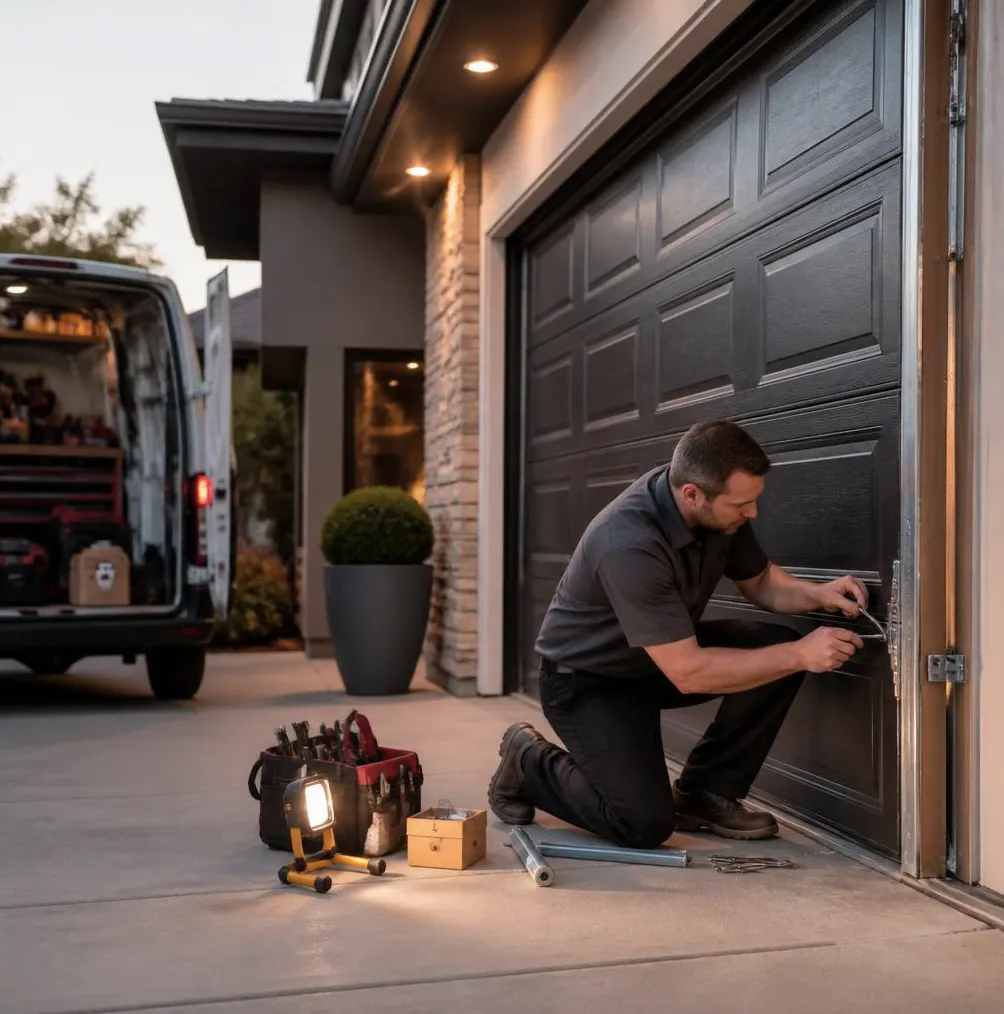
If your door is sagging, slamming, grinding, or the springs show visible wear, that's past the point of a DIY lubrication job — it's a safety issue. Lawton Garage Door can handle a full pre-winter inspection as part of our Garage Door Maintenance service, checking balance, hardware, and seals before the cold really sets in. If a spring has already started to go, our Spring Replacement service gets it swapped out correctly and safely, with the right tension for your specific door — not something worth guessing at with a cracked coil and a cold garage.
If something fails unexpectedly — a snapped cable, a door that won't budge during a storm — we offer emergency service for homeowners across Lawton, Fort Sill, Cache, Elgin, Fletcher, Medicine Park, Geronimo, and Comanche.
Don't wait for the first ice morning to find out what your door's been hiding all summer. Call Lawton Garage Door today to get it checked, adjusted, and ready for whatever this winter brings.